Mind the Gap, Mind the Frills: Riding American Transit in Full Lolita Without Losing Your Dignity
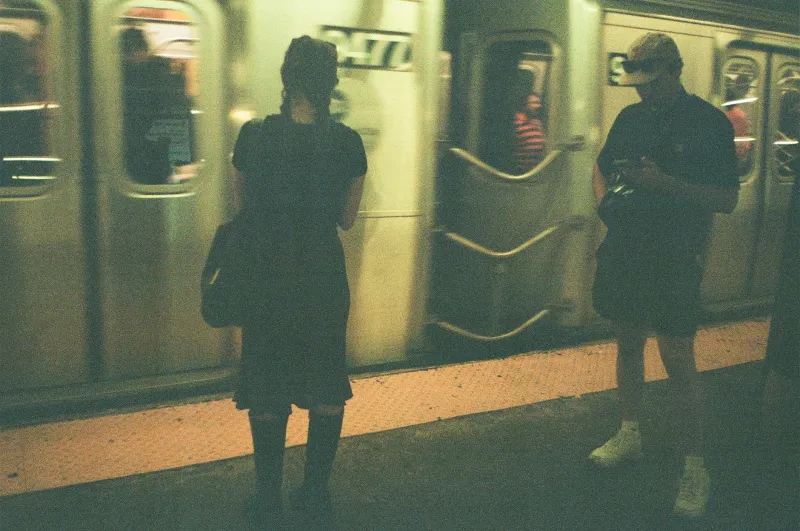
There's a special kind of confidence required to step onto a crowded Red Line car in a bell-shaped skirt that adds eighteen inches to your personal space bubble. Ask anyone who commutes in lolita regularly and they'll tell you the same thing: the fashion is the easy part. The transit is the boss battle.
But here's the good news — after years of watching lolitas navigate the NYC subway, Chicago's El, and Portland's MAX with varying degrees of success, the survival strategies are surprisingly consistent. Consider this your field manual.
Choose Your Train Car Like You Choose Your Cut
Not all train cars are created equal, and neither are the times you board them. If your schedule allows any flexibility at all, dodging the 8 a.m. crush is the single biggest quality-of-life upgrade for a frilly commuter. A 9:15 train versus an 8:15 one can be the difference between a serene ride and a stranger's backpack lodged directly into your petticoat.
When you can't dodge rush hour, be strategic about the car itself. The first and last cars are usually less crowded than the middle ones. On the CTA, cars near the operator tend to fill up slower. In New York, positioning yourself at the center of the platform — where the middle cars stop — puts you where everyone else already is; walk a few extra yards toward the ends instead.
The Seat Strategy Nobody Teaches You
Once on board, your seating choice matters more than your coord does. The best seats for a full skirt are:
- Single seats or end seats — fewer neighbors means fewer fabric negotiations
- Seats near the doors with the fold-down style — you can angle sideways and keep your skirt volume intact
- Forward-facing seats with legroom — you want space for the skirt to settle, not to be compressed against the seatback in front of you
Avoid the middle seats of a three-across bench at all costs. You will spend the entire ride with your knees pressed together like a Victorian heroine, and your skirt will pool awkwardly on both sides anyway.
If the train is standing-room only, claim a corner near a pole or wall. Not only does it give you something to brace against, it protects the back of your skirt from swinging doors and careless commuters. One Portland lolita we spoke with swears by standing in the wheelchair area during off-peak hours — just be prepared to move immediately if someone needs the space, because nothing ruins the elegant vibe faster than being asked to.
Bag Choices That Won't Betray Your Skirt
Crossbody bags are the enemy of the jsk. Every time you swing that strap off your shoulder, it drags across your lace and bows like sandpaper. Commuter lolitas overwhelmingly recommend a structured handbag or backpack with padded straps — worn on both shoulders, or carried in hand during boarding and alighting.
If you carry a backpack, wear it in front on crowded cars. It's not the most glamorous look, but neither is a stranger's tote bag strap shredding your tulle. Save the glamour for the platform photo before you board.
Weatherproofing: The Umbrella Doctrine
American transit means outdoor platforms, wind tunnels between stations, and that one bus stop with zero shelter. A compact umbrella that clips to your bag is non-negotiable, but here's the trick: in wind, hold your umbrella low and tilted forward, and use your free hand to gently press the front of your skirt toward your legs. A gust under a petticoat on a Chicago platform is a cartoon moment you only get to experience once before you start planning for it.
In winter, a long wool coat worn open over your coord does double duty — it shields the skirt from slush and salt, and it compresses your silhouette just enough to slip through turnstiles and fare gates unscathed. Speaking of which: turnstiles are a skirt hazard in their own right. Give yourself extra time, tap in, and step through deliberately. The rotating bars of older NYC turnstiles have claimed many a chiffon hem.
Handling the Curious Commuter
Someone will ask. Someone always asks. Usually it's "what are you dressed as?" or, if you're lucky, "I love your dress!" The veteran move is a warm, brief answer: "It's lolita fashion — it's a Japanese street style, all about the silhouette." Smile, offer the name of the style, and let them move on. Ninety percent of interactions end there, happily.
For the occasional rude comment, headphones are your friend. You don't owe anyone an explanation, and the calmer and more unbothered you appear, the faster the moment passes. Most commuters, in our experience, are simply curious — and a surprising number of grandmothers on the Brown Line have told lolitas they look "just lovely, like my mother's church dresses."
The Golden Rule: Build in Buffer Time
Every transit horror story we collected had the same root cause: running late. When you're rushing, that's when hems catch, straps snag, and you board the wrong-direction train in a panic. If you're wearing lolita to work, school, or a meetup, give yourself twenty extra minutes. Arrive with your bow straight and your blood pressure normal.
The commute doesn't have to be the worst part of wearing lolita out. Treat it like part of the coord — planned, practiced, and worn with the same care you put into your lace. The gap between the train and the platform is wide, but so is the gap between a good day and a great one. Mind both.